Utility-scale solar is transforming the energy landscape. These large solar farms generate electricity for the grid rather than individual homes or businesses. They reduce reliance on fossil fuels, lower emissions, and strengthen energy security. In this guide, we’ll explore how utility-scale solar works, its benefits, costs, challenges, and future prospects.
Learn more about Energy America’s renewable energy expertise and see how we deliver large solar projects from planning to operation.
Understanding Utility-Scale Solar
Utility-scale solar refers to large solar power plants that generate electricity for the utility grid. Unlike rooftop or commercial solar, which powers a building first, utility-scale solar sends all generated energy directly to the grid.
These projects often require millions of solar panels, large land areas, and advanced technology to ensure maximum efficiency. They are designed to serve entire communities or industrial operations.
Key points:
- Generates electricity at a mass scale
- Feeds power directly into the grid
- Typically uses power purchase agreements (PPAs) to sell energy
Grid Connection and Power Delivery
Solar panels capture sunlight and convert it into DC electricity. Inverters then convert DC to AC electricity, which can travel through transmission lines to homes and businesses.
Substations play a critical role in stepping up voltage for efficient long-distance transport. The grid operator ensures power is balanced and delivered reliably.
For more about our solar projects, visit Energy America Projects.
Advantages for Utilities
Utilities favor large solar farms because they produce electricity at lower costs per watt, offer predictable energy output, simplify maintenance and grid integration, and scale easily to meet growing energy demand.
Comparing Solar System Types
Utility-scale solar differs in size, cost, and purpose. Rooftop solar powers one building, while commercial solar serves businesses. Utility-scale systems generate megawatts of electricity for the grid.
Key differences:
- Size: 5 MW to 1 GW vs. kilowatts for rooftop solar
- Cost per watt: Lower due to economies of scale
- Grid impact: Supports large populations, stabilizes the system
Behind-the-Meter Systems
“Behind-the-meter” refers to solar systems that power a building before sending excess electricity to the grid. These installations benefit the owner with lower electricity bills but have limited impact on the grid compared to utility-scale systems.
Project Size and Capacity
Large size allows for lower cost per unit of energy, bulk purchasing of panels and equipment, use of advanced technologies like solar trackers, and reliable energy delivery for utilities.
A utility-scale solar project usually starts at 5 MW, enough to power roughly 1,000 homes. Some projects exceed 500 MW, serving tens of thousands of households. Energy America specializes in developing projects across multiple scales to meet diverse energy needs.
Measurement Standards
Megawatts (MW) measure the generation capacity of a solar project. It allows agencies and utilities to compare projects of different sizes and plan energy supply reliably.
A 100 MW solar plant can power around 17,000 homes annually. Output depends on sunlight, panel efficiency, and local climate conditions.
Types of Utility-Scale Solar Technologies
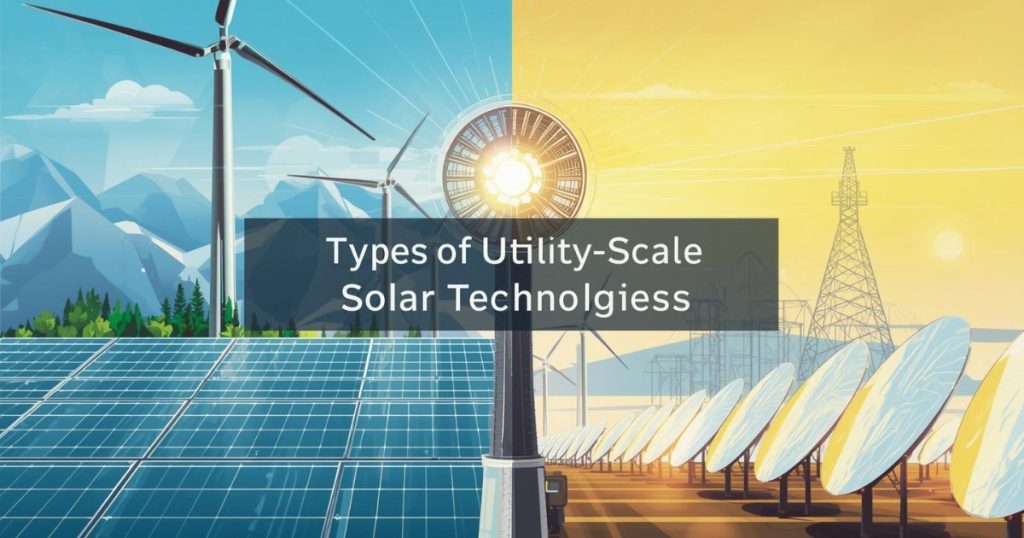
Types of Utility-Scale Solar Technologies
There are two main types:
- Solar Photovoltaic (PV) Plants: Convert sunlight directly into electricity using solar panels
- Concentrated Solar Power (CSP) Plants: Use mirrors to focus sunlight, generate heat, and produce electricity
Solar PV Plant Operations
Solar panels collect sunlight and convert it into DC electricity. Inverters transform DC into AC for the grid. Panels are often mounted on tracking systems to follow the sun and maximize output.
Ground-mounted panels support thousands of panels in a solar farm, allow for tracking technology, and optimize sunlight exposure. Learn more about our high-efficiency solar modules in our showroom.
Solar Tracking Technology
Trackers tilt panels to follow the sun throughout the day. Single-axis trackers follow east-west movement. Dual-axis trackers adjust in all directions, increasing energy capture by 15–30% compared to fixed systems.
Concentrated Solar Power
CSP uses heliostats (mirrors) to focus sunlight on a central receiver. It generates thermal energy to produce electricity via turbines. CSP is often used for large-scale solar projects that need energy storage.
Thermal storage allows CSP plants to generate electricity after sunset, maintaining grid supply without batteries.
Project Ownership and Development
Projects are developed by:
- Independent Power Producers (IPPs): Specialize in renewable energy
- Utility Companies: Integrate large projects into the grid
- Private Investors: Partner with developers for funding
Independent Power Producer Leadership
IPPs specialize in large-scale project development and manage long-term risks better than utilities. They negotiate PPAs, secure financing, and operate efficiently.
Utilities often buy power from IPPs via PPAs. Investors provide capital and share revenue. This collaboration spreads risk and ensures project success. Energy America’s expertise spans development, manufacturing, and construction.
Electricity Sales and Markets
Electricity buyers include utility companies, corporations seeking renewable energy, and entities purchasing renewable energy credits (RECs).
Long-Term Contracts
PPAs guarantee predictable energy costs, allowing utilities to plan budgets and meet renewable energy targets.
Companies like Amazon or Google buy solar energy via PPAs. This reduces carbon footprint and demonstrates commitment to sustainability.
Renewable Energy Credits
RECs certify that electricity comes from renewable sources. Corporations buy them to offset carbon emissions or comply with regulations.
Power Purchase Agreements
PPAs provide financial security for developers and guarantee long-term electricity sales. This stability attracts investors and ensures project viability.
Developers gain predictable revenue streams, allowing them to repay loans and secure financing for construction.
Stable cash flow from PPAs reduces investment risk. Lenders see them as low-risk projects for long-term returns. Energy America works with investment-grade offtakers to ensure project success.
Project Costs and Economics
Costs are measured in dollars per watt of installed capacity.
| Project Type | Cost per Watt (2021) | Notes |
| Fixed-Tilt PV | $0.77 | Lower initial cost |
| Tracking PV | $0.89 | Higher energy output |
| CSP | $2.50+ | Includes thermal storage |
Federal tax credits can reduce these costs by 30%, improving project economics.
Economic Indicators
Cost per watt shows the investment required for each unit of capacity. Lower costs per watt mean better returns and more affordable electricity.
Trackers increase construction costs but boost electricity output, lowering long-term levelized cost of energy.
Tax credits reduce upfront costs, improve ROI, and make large solar projects more attractive to investors.
Electricity Pricing
Wholesale prices in the U.S. average $24–$30 per MWh (2.4–3 cents per kWh). Prices vary by location, project size, and sunlight conditions.
Competitive Pricing
Falling solar panel prices, efficiency improvements, and long-term PPAs keep solar electricity cost-effective compared to coal or gas.
Transmission adds 40–50% to the wholesale price. Utilities balance generation costs with grid infrastructure expenses to set consumer rates.
Project Development Process
The development process includes several critical stages:
- Site Selection: Identify land with sun exposure and grid access. Use platforms like NREL maps.
- Permitting & Approval: Obtain local, state, and federal permits.
- Financing: Secure investors and tax incentives.
- Engineering & Procurement: Design system and buy equipment.
- Construction: Install panels, inverters, and substations.
- Commissioning: Test systems and connect to the grid.
Site Selection Importance
Sun exposure, land slope, and grid access affect output and economics. Poor site choice reduces efficiency and revenue.
The permitting and approval process typically takes 1–3 years, depending on project size and regulatory complexity.
Financing Requirements
Large solar projects require millions of dollars. Investors must commit funds before construction starts to secure equipment and labor. Explore our global portfolio of projects to see successful implementations.
Construction Operations
Crews grade land, install racking systems, mount panels, set up inverters, and build substations. Safety and precision are critical. Our expertise includes comprehensive construction management for utility-scale installations.
Essential Equipment Components
A utility-scale solar plant consists of:
- PV Panels: Convert sunlight to electricity
- Inverters: Change DC to AC
- Mounting Systems: Support panels and trackers
- Trackers: Increase energy output
Panel Efficiency
Panel efficiency directly impacts energy production. Large farms use high-performance crystalline silicon panels for maximum output. View our advanced solar panel technology including TOPCon modules with over 25% efficiency.
Inverter Function
Inverters ensure safe and stable AC electricity that the grid can use efficiently.
Mounting and Tracking Systems
Proper orientation and solar tracking increase sunlight capture, boosting total energy production and return on investment.
Industry Challenges
Land Availability
Projects need large, contiguous land with good sun exposure. Urban areas and environmentally sensitive zones are unsuitable.
Grid Integration
Variable sunlight causes output fluctuations. Grid operators need storage or backup power to maintain stability. Energy America addresses this through integrated battery energy storage systems (BESS).
Capital Requirements
High initial costs require significant financing. Smaller developers may struggle to raise capital without PPAs or tax incentives.
Benefits and Impact
Energy Security
Utility-scale solar diversifies energy sources, reducing dependence on imported fuels and increasing grid resilience.
Emissions Reduction
These projects generate clean electricity without carbon emissions, replacing fossil fuel generation.
Job Creation
Construction, operations, and maintenance support thousands of local jobs, boosting regional economies. Learn about our commitment to sustainability and community impact.
End-of-Life Considerations
Land Restoration
Land can return to farming or natural habitats. Solar minimizes permanent environmental impact.
Panel Recycling
Recycling recovers valuable materials, preventing waste and supporting sustainable energy cycles.
Future of Utility-Scale Solar
Grid Resilience
Predictable, clean power stabilizes the grid and complements renewable energy sources.
Continued Expansion
Demand for clean, low-cost energy grows. Companies and utilities invest to meet sustainability targets and reduce energy costs. Contact Energy America to discuss your utility-scale solar project needs.
FAQs
1. How long does it take to build a utility-scale solar project?
Typically 12–18 months after permitting and financing.
2. What is the typical lifespan of a solar farm?
35–40 years, with panel recycling at the end.
3. How much land does a 100 MW solar farm require?
Roughly 500–1,000 acres depending on technology and layout.
4. Can CSP plants generate electricity after sunset?
Yes, with thermal energy storage like molten salt.
5. Are utility-scale solar projects profitable?
Yes, with PPAs and tax incentives, solar projects offer stable returns.